

Extinction
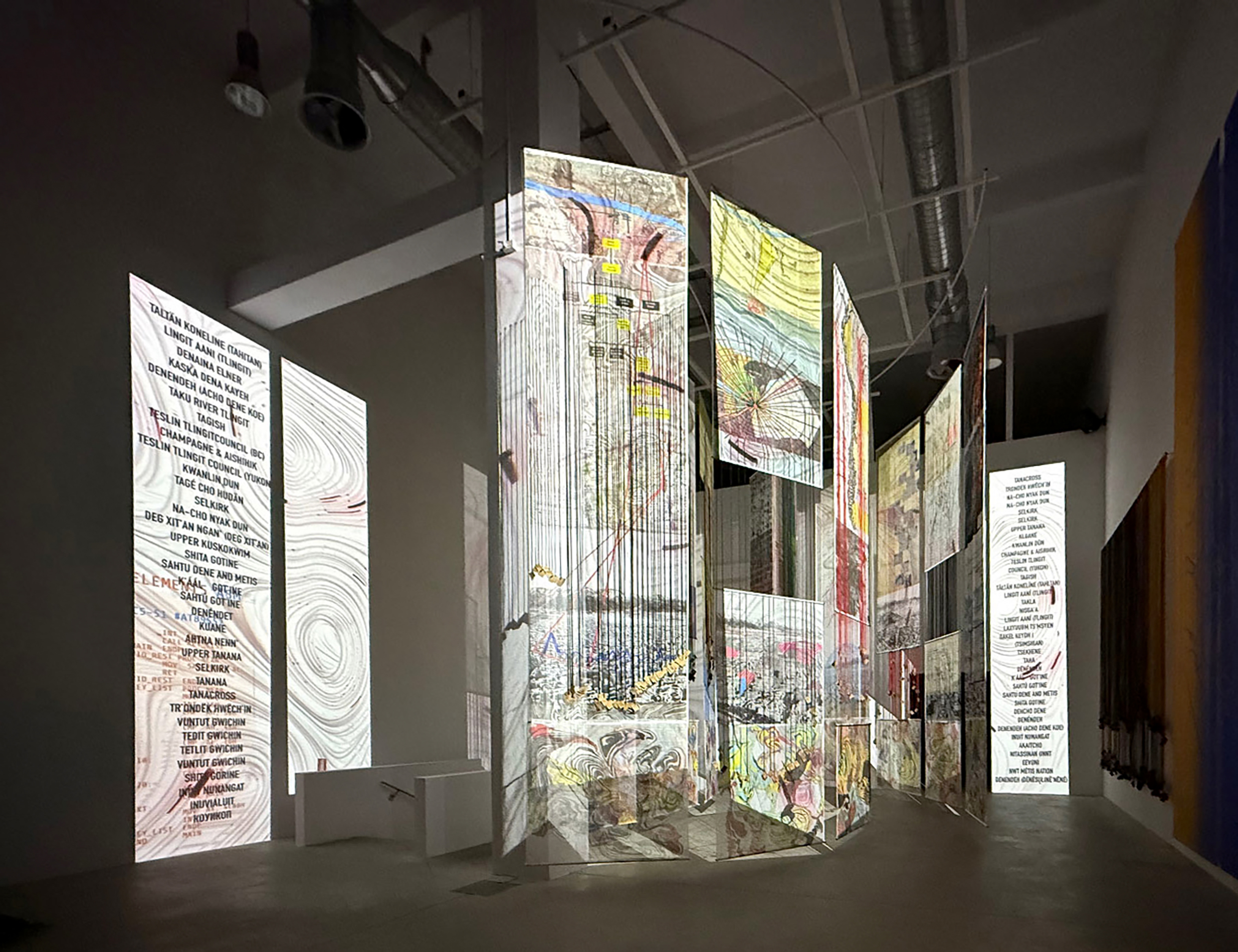
On the occasion of the group exhibition of shortlisted finalists for the 5th edition of the Mario Merz Prize at Fondazione Merz (Turin, Italy), Voluspa Jarpa presents The Extinction Project (2025). The work grows out of the learnings of Sindemia (2022–2024), a research project that examined the social conflicts that unfolded in Latin America between 2018 and 2023, linked to the deterioration of democratic institutions and to the social effects of extractive processes. From this experience, the project opens a central question: whether there is a territorial memory capable of weaving together contemporary social processes and relating historical times that unfold from the past toward the future.
The work constructs a synaesthetic experience in which vision, listening, spatial movement, and the viewer’s traversal of the installation make it possible to sense how certain events reverberate from past to present, altering the order of time and the way in which occurrences are connected. Within this framework, The Extinction Project uses extinction as a critical metaphor—not only in a biological sense, but also in cultural and social terms—as part of a Western colonial “civilizing” project. The notion of membranes is key to approaching this complexity: rather than separating problems, the work proposes observing their connections and synchronicities, activating sensory resources so they can be perceived as simultaneous layers.
To articulate this spatio-temporal cartography, the project draws on the revision of three moments in the American continent, materialized in space as three dimensions of information-image. On the one hand, it addresses processes of extinction affecting Indigenous peoples in the 16th and 17th centuries, revisited through the paper “Earth System Impacts of European Arrival and the Great Mortality in the Americas after 1492.” On the other, it maps the intervention in democratic processes through the implementation of dictatorships across Latin America between the 1950s and the 1980s, in the context of the Internal State Security Doctrine and U.S. political intervention.
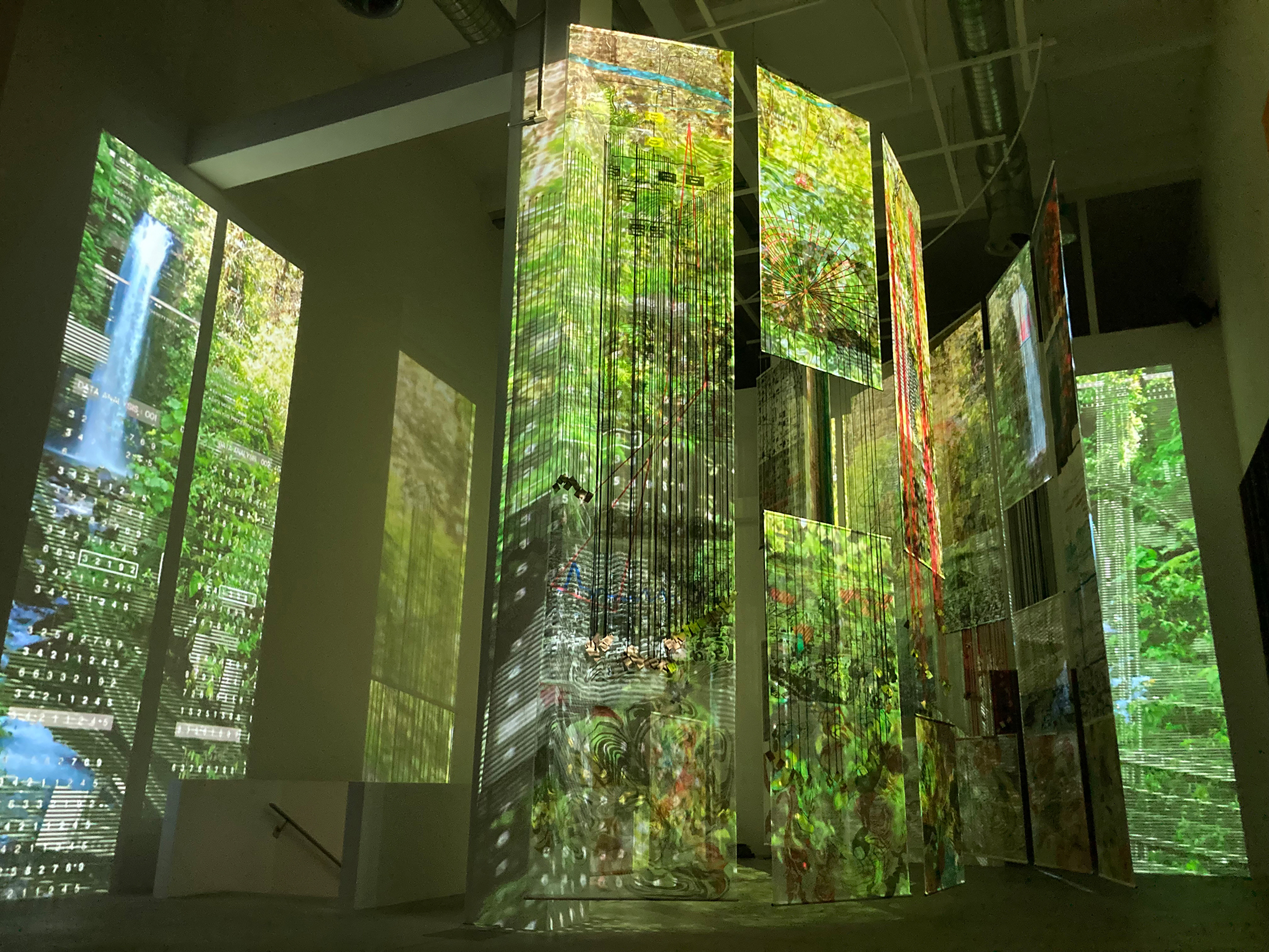
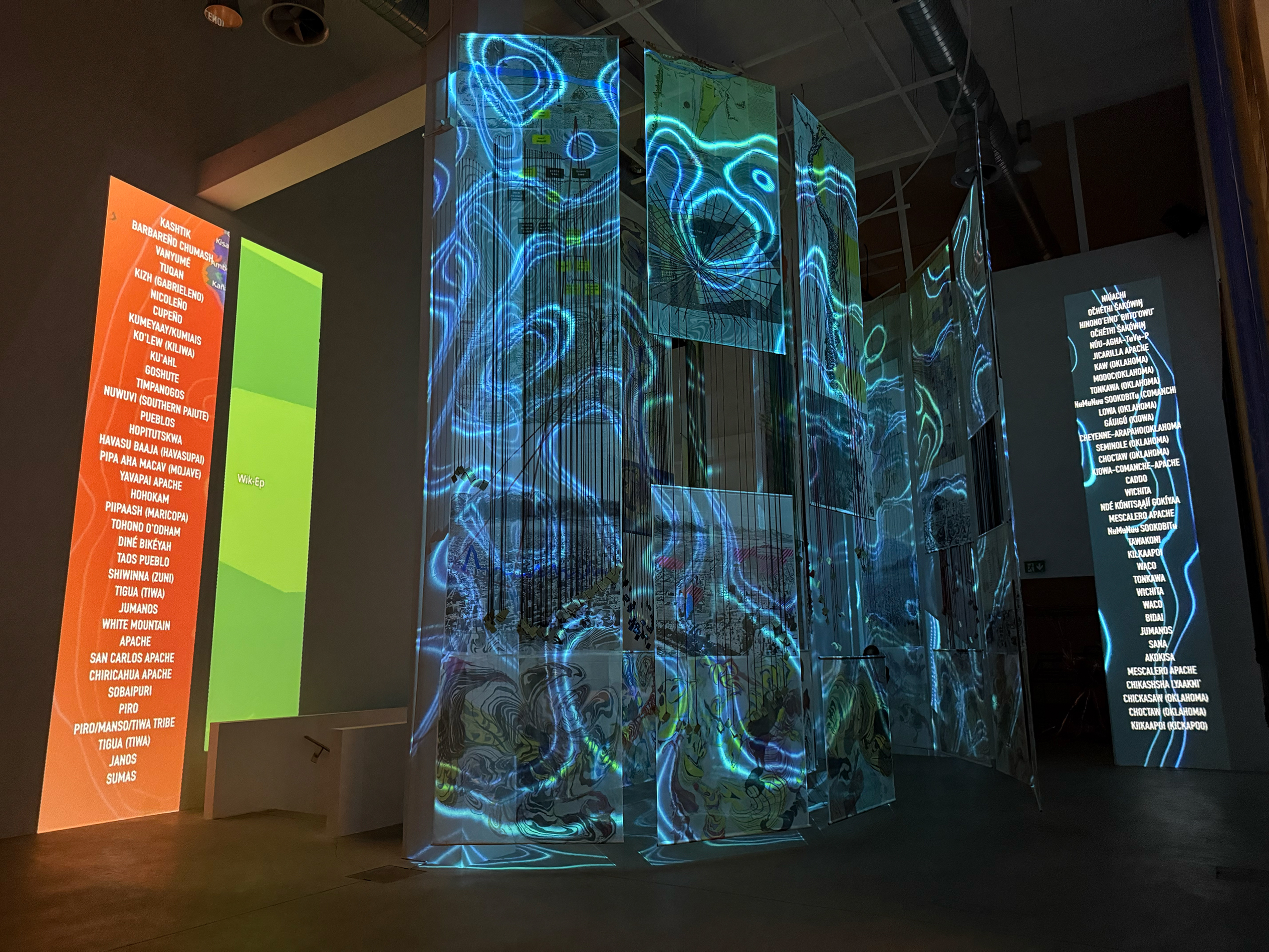
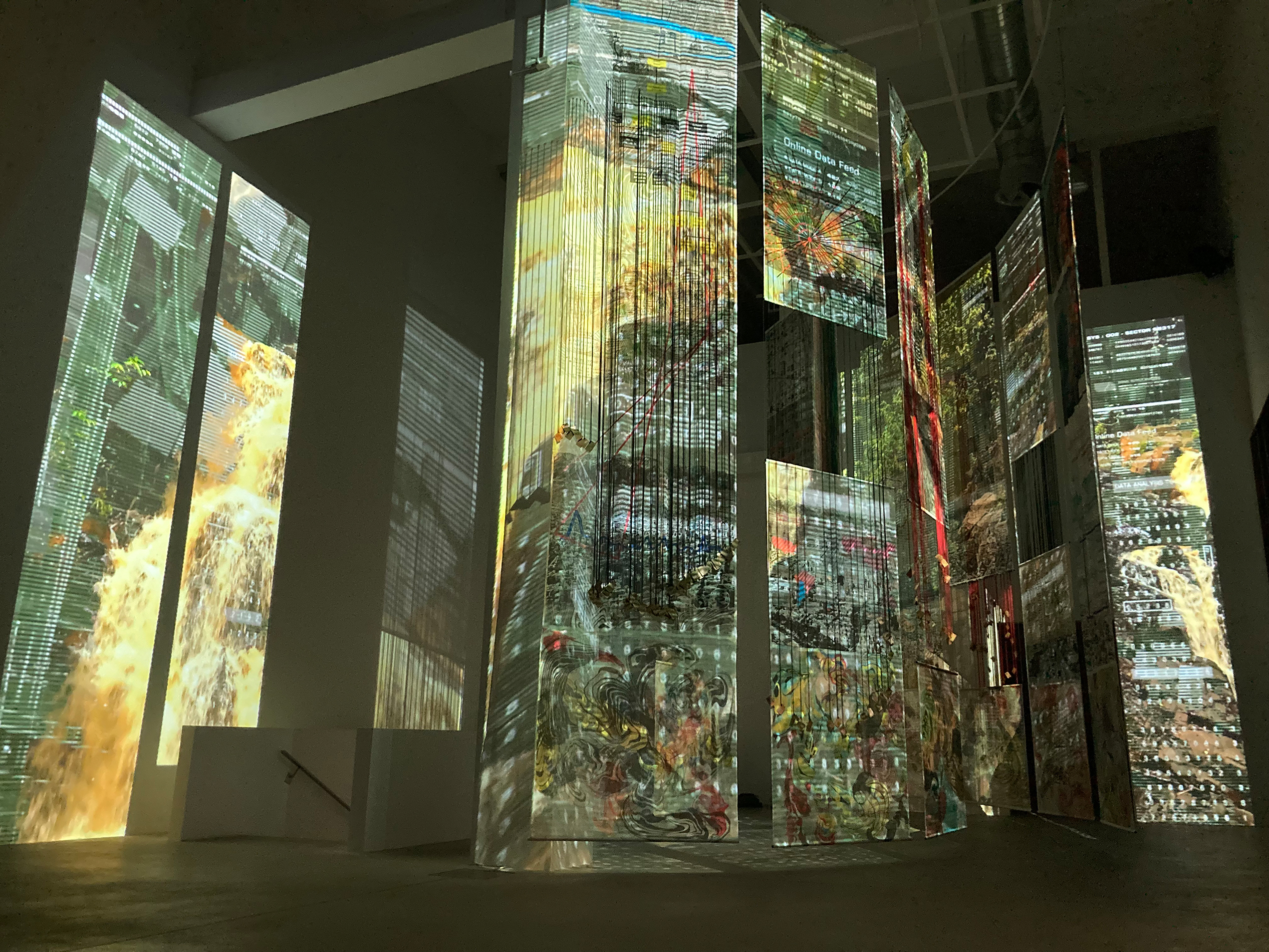
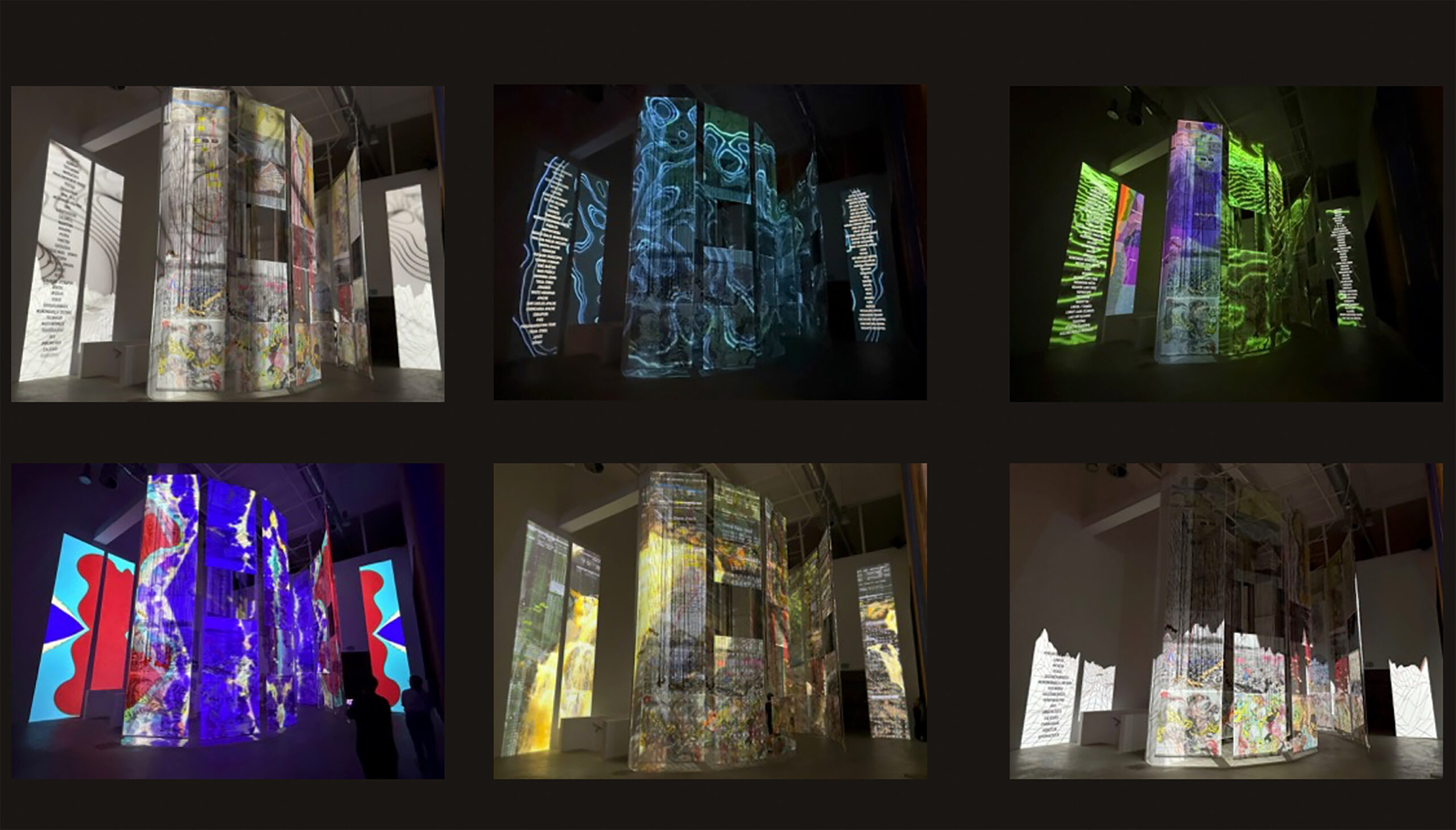
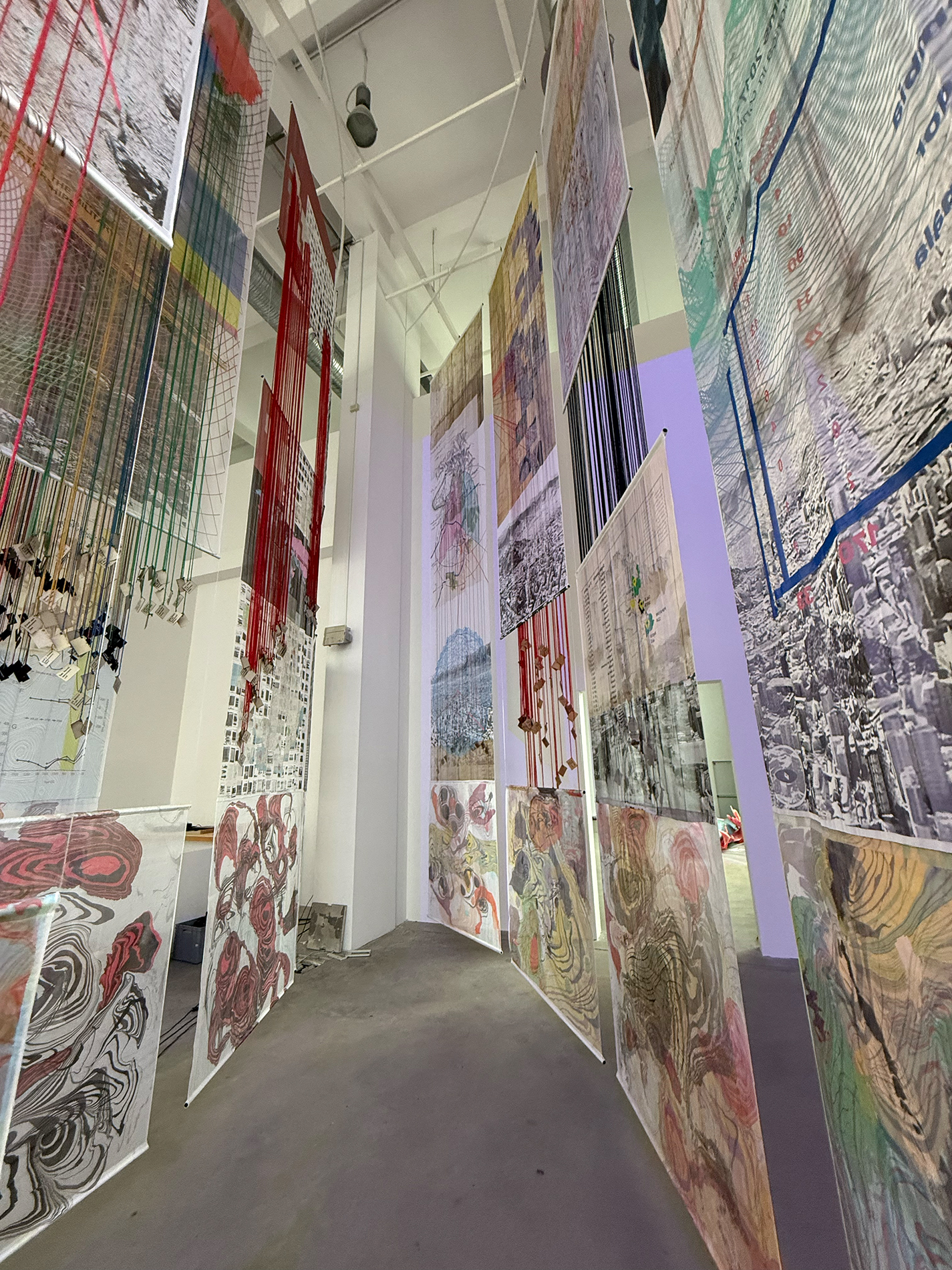
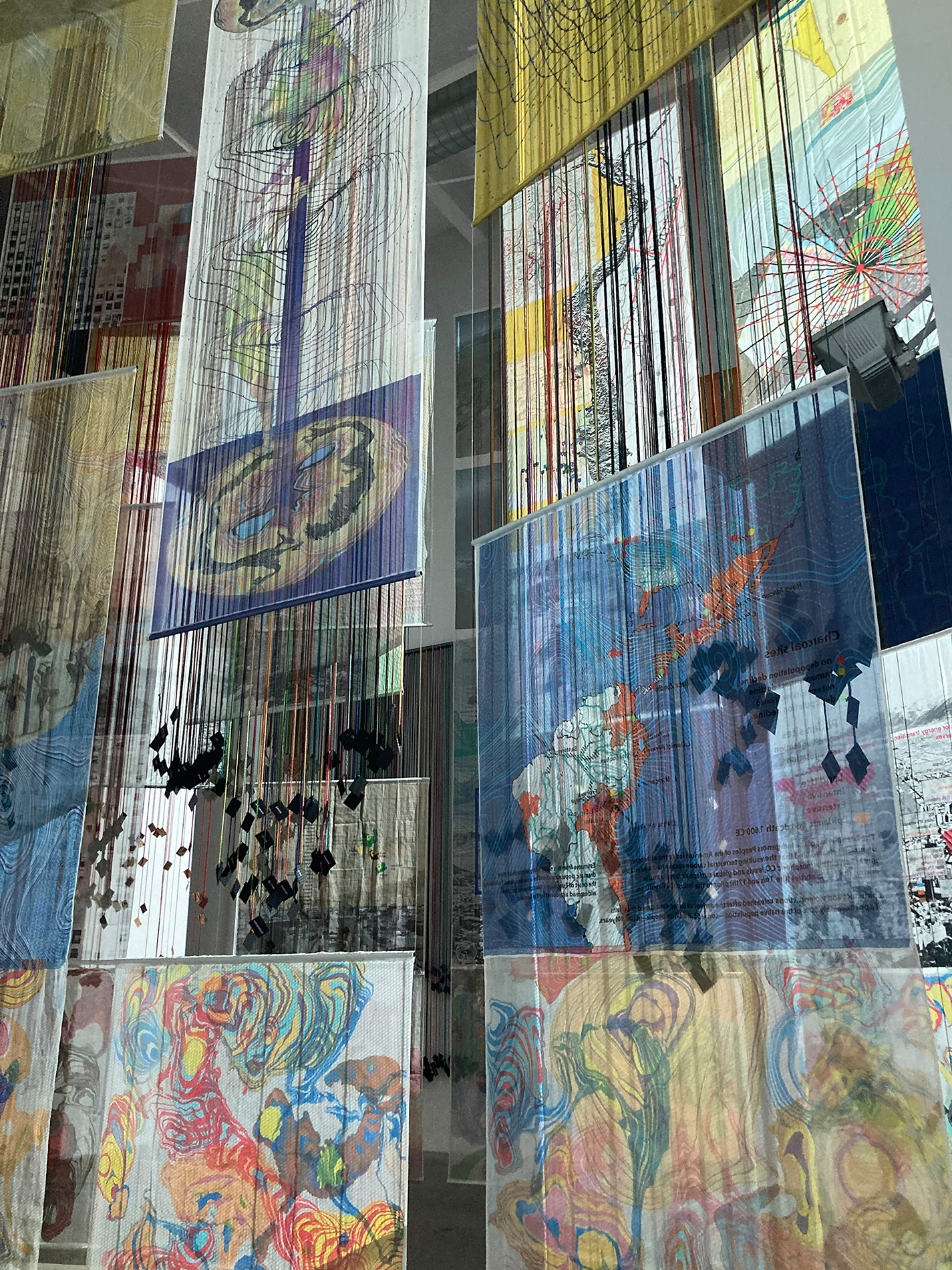
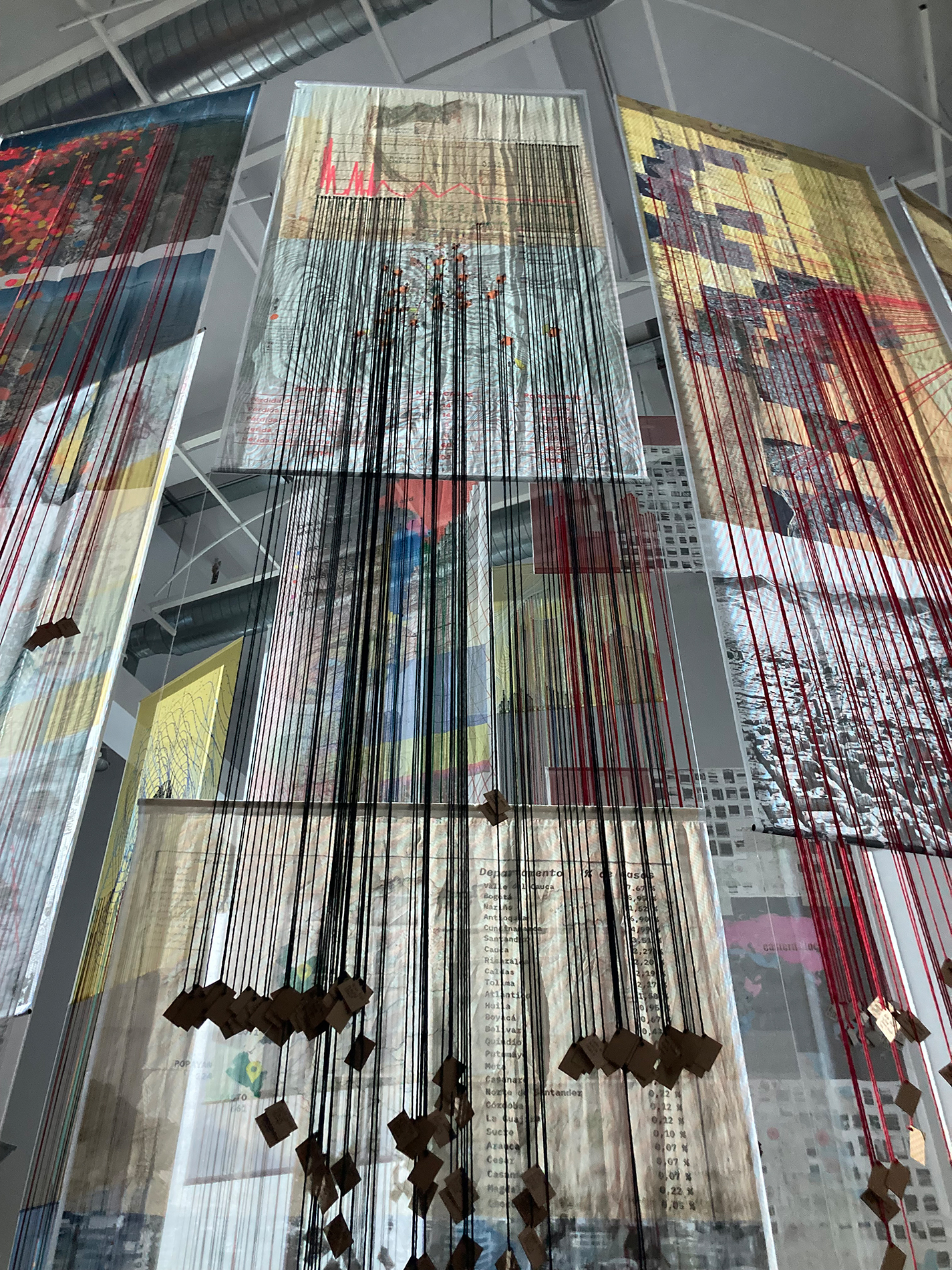
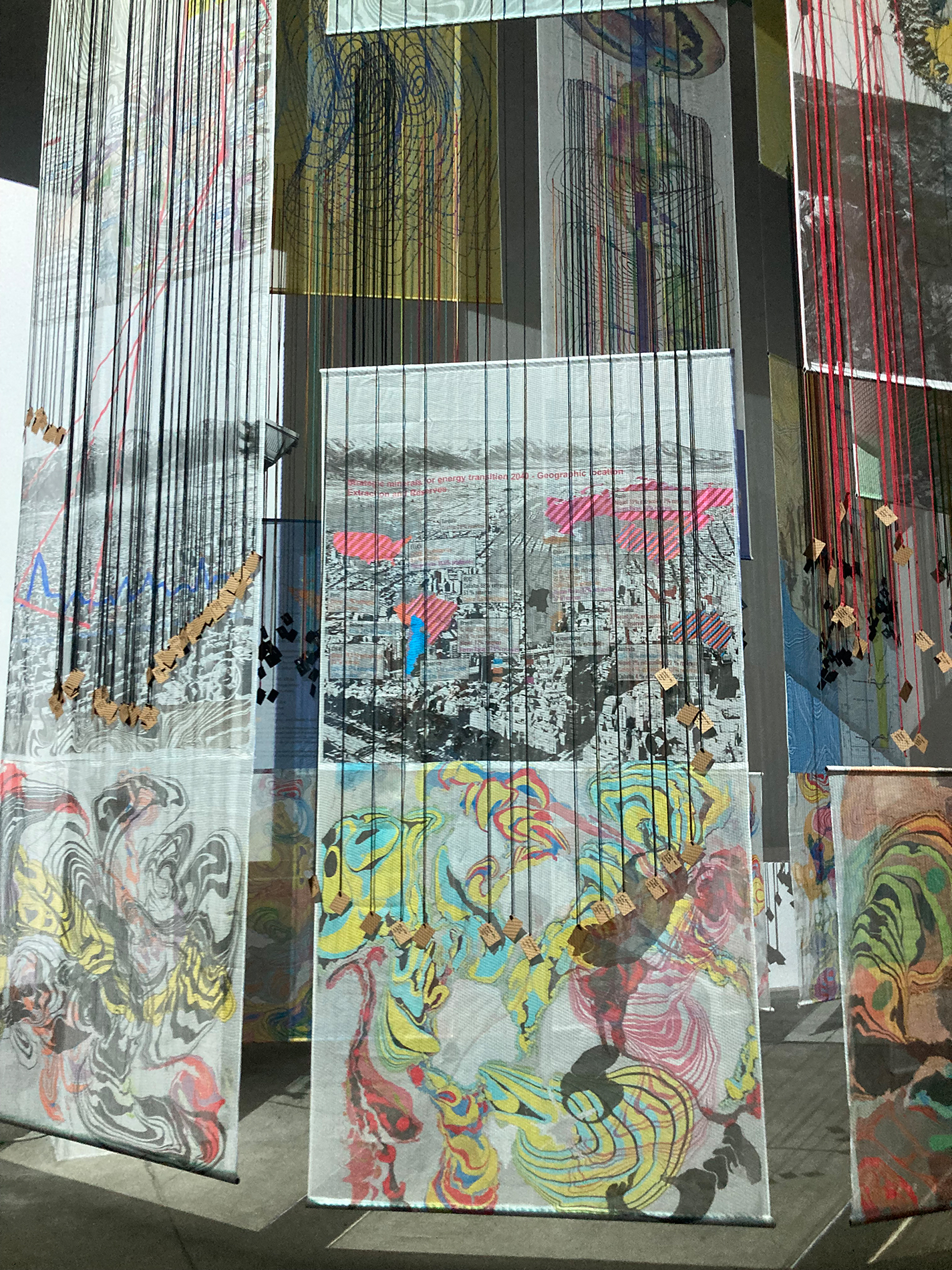
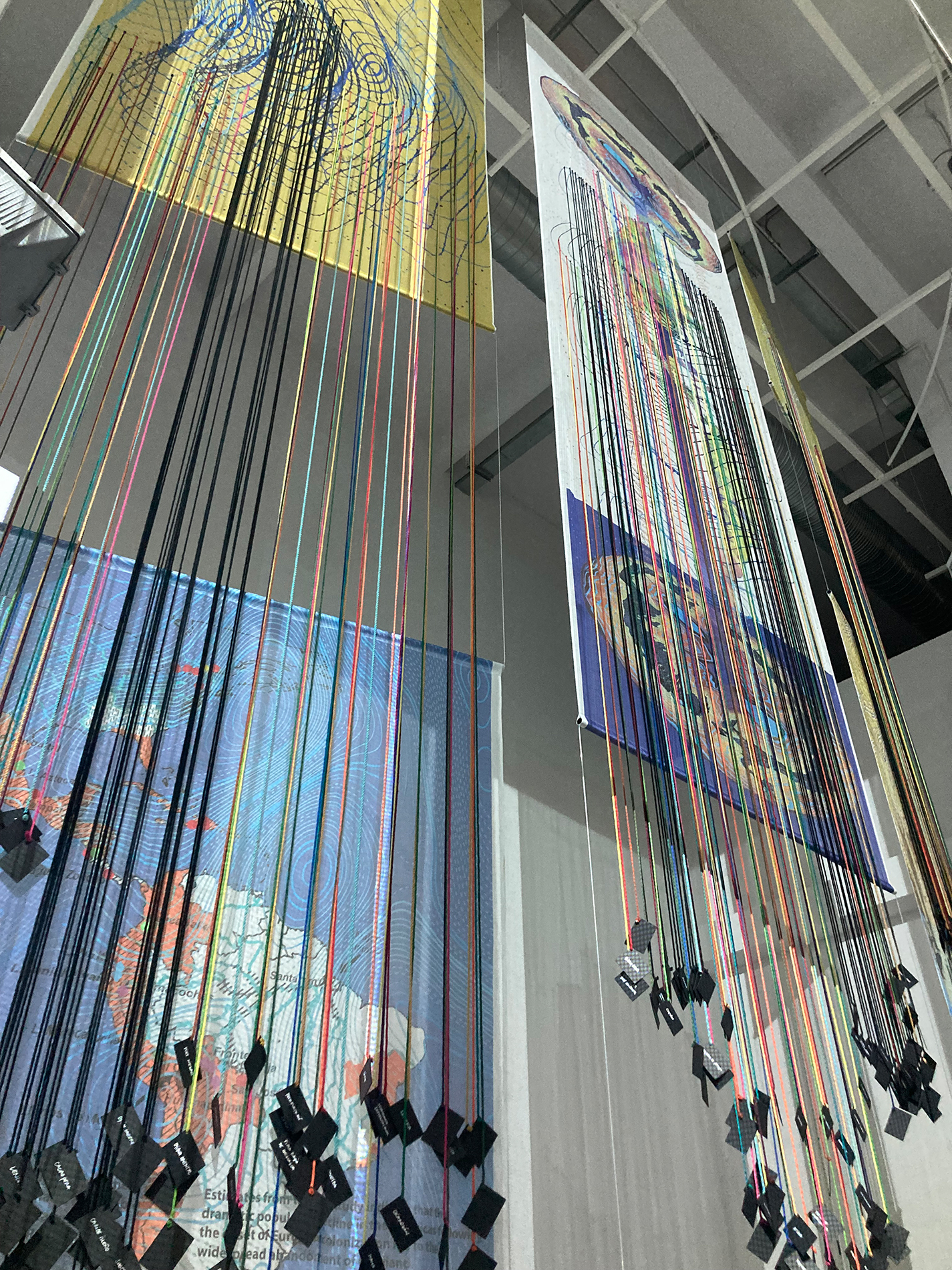
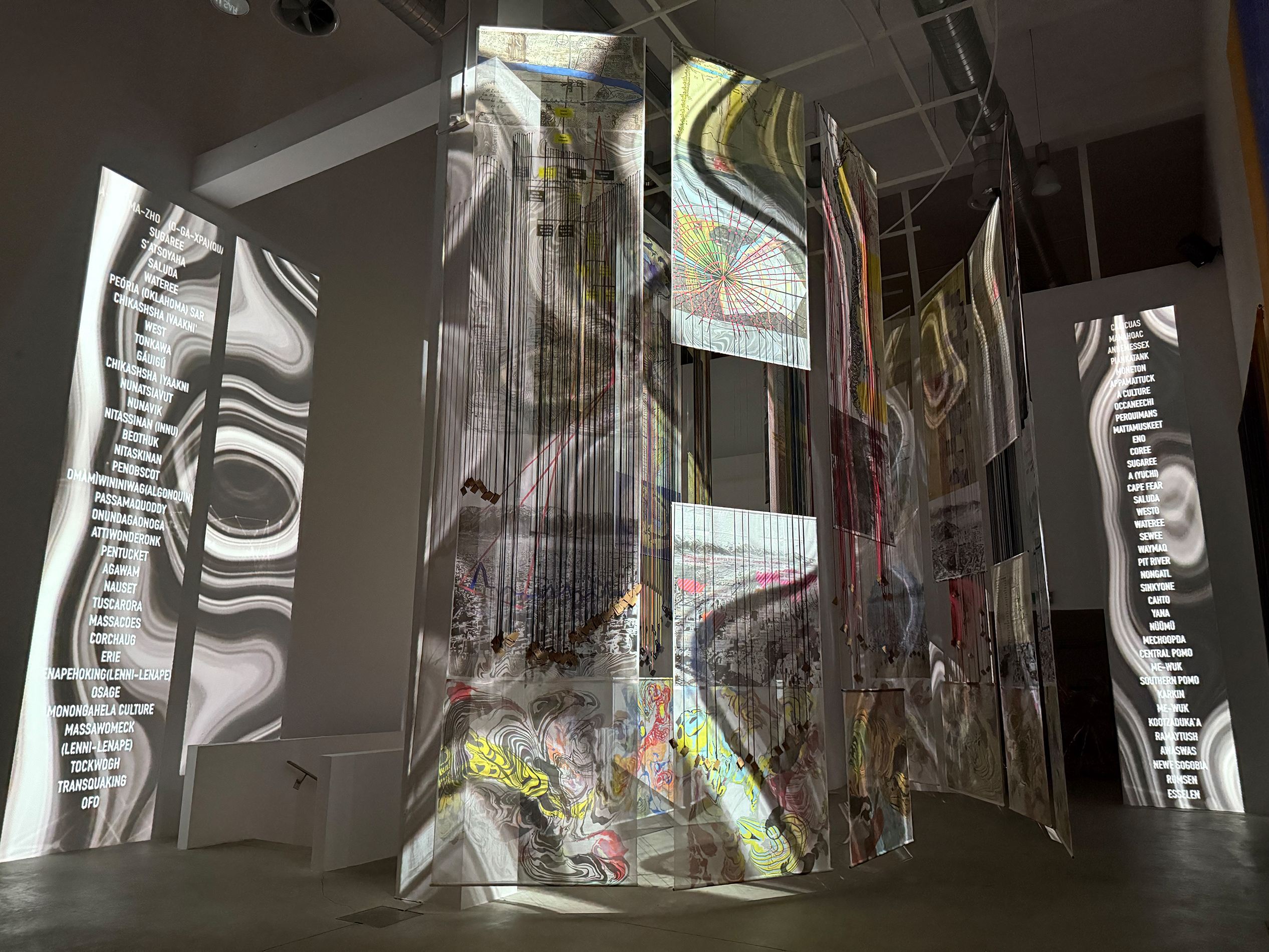
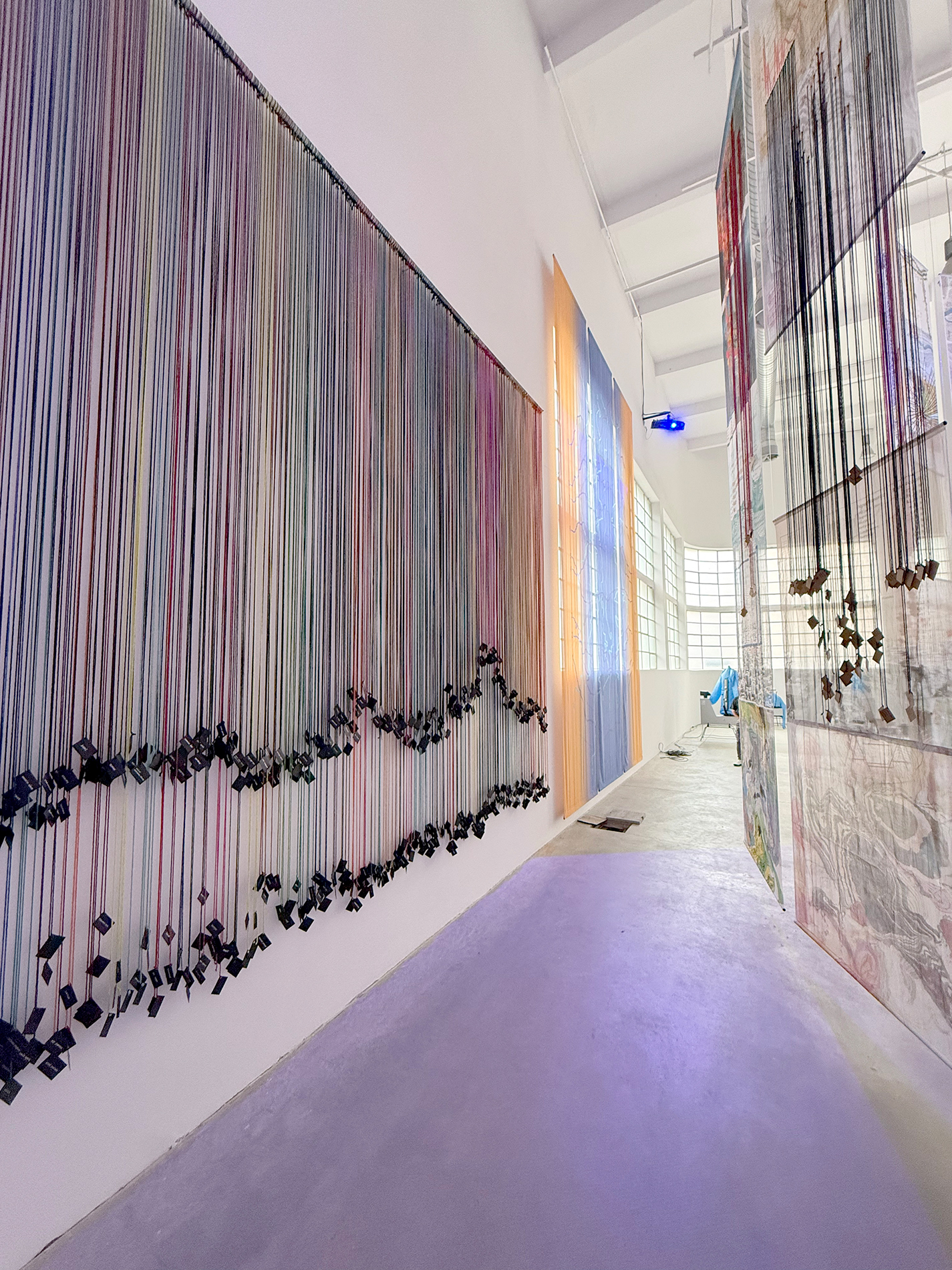
Materially, the installation is organized through three temporal membranes made of translucent cotton organza (approx. 7 m high × 1.5 m wide), where data and images are synthesized into a spatial cartography. These textiles function as surfaces that are both structural and sensitive: they fix images of territorial memory through printing, painting, and textile techniques, constructing a stratification of violences and extinctions that resurface in the present. The installation also considers the building’s windows with gradient-dyed fabrics that follow the course of the sun during the exhibition, and a component of colored threads with a plaque gathering the names of ancestral peoples of the continent, marking in black those nations that are extinct.
These membranes act simultaneously as containers for still images and as screens for a video mapping that introduces a “liquid image” interacting with the static layers, adding further temporalities and sensorial registers. The synchronized editing between projection and installation directs the viewer’s visual path: at times it floods the entire installation, at others it concentrates on one or two panels or on specific details, and it also withdraws to allow the textiles to be contemplated without intervention. The experience is completed by an original sound composition that accompanies the mapping and traces a sonic geography of the Americas, establishing a dialogue between cultures that have resisted extinction processes and those that have disappeared, integrating digital technology, field recordings, and interpretations of native instruments.
exhibición:
Curated by: Fondazione Merz
Video mapping: Luis Barrera, Pixelmaker
Sound design/composition: Juan Pablo Nicoletti
Design and production: Edmundo Browne
Photos: Voluspa Jarpa Studio
ciudad:
país:
Especificación:
2025 — The Extinction Project — Installation: 13 translucent cotton organza textiles (approx. 7 m × 1.5 m each), printing, painting, and textile interventions with threads; video mapping; sound composition.